Bale Collision Center Publishes Consumer Guide to Collision Damage Around Vehicle Cameras and Sensors
Little Rock, AR - October 14, 2026 - PRESSADVANTAGE - Bale Collision Center has published consumer guidance explaining
Press Release Disclaimer: This is a press release distributed through the XPR Media network. It has not been independently verified by our newsroom.

Little Rock, AR – October 14, 2026 – PRESSADVANTAGE –
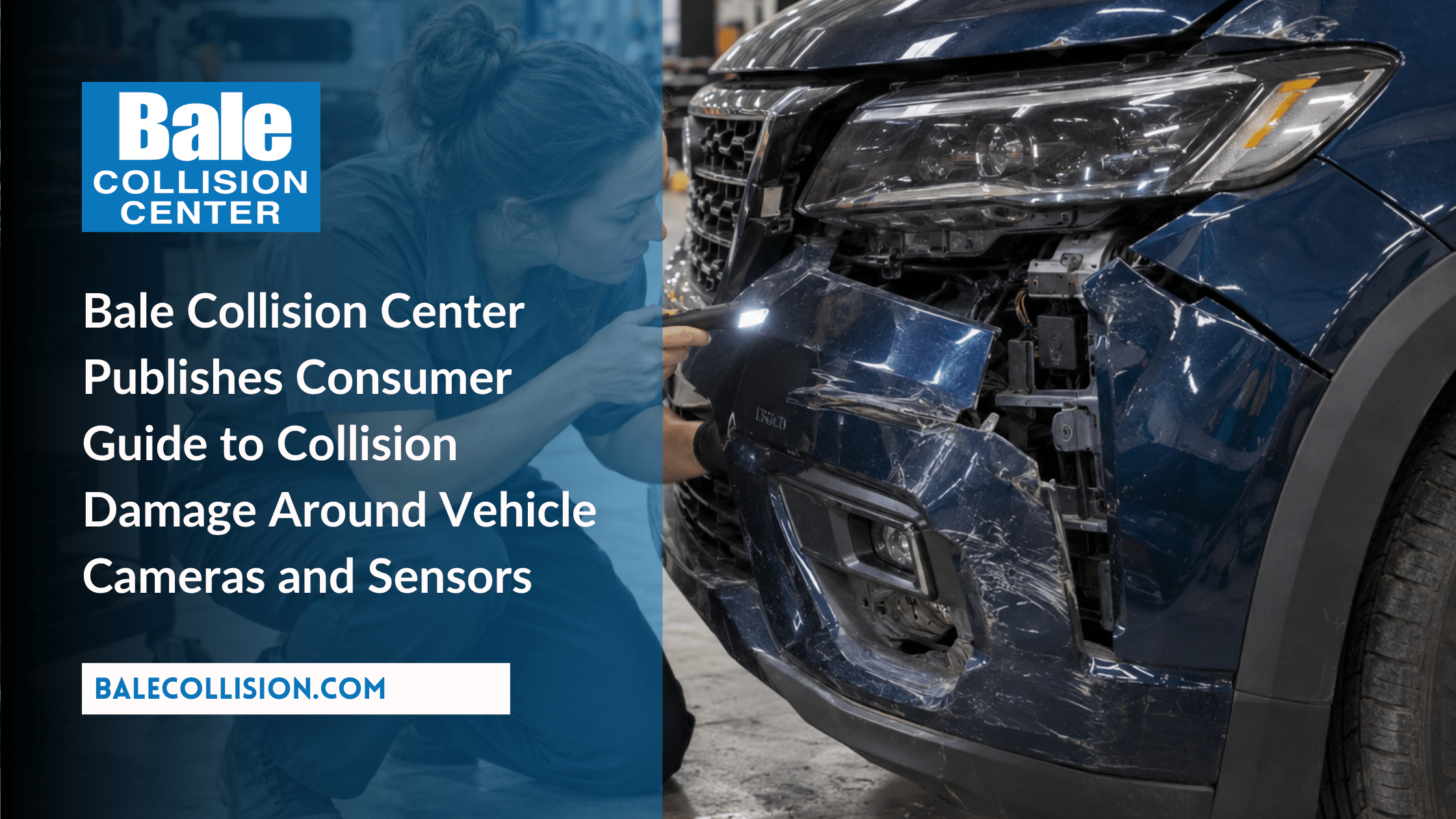
Bale Collision Center has published consumer guidance explaining what drivers should know when collision damage occurs around vehicle cameras, radar units, and other sensors. The October resource focuses on how modern driver-assistance technology can be positioned within bumpers, windshields, mirrors, and other areas commonly affected during an accident.
The guidance expands on Bale Collision Center’s ADAS calibration information by explaining the relationship between collision-damaged body components and the electronic equipment positioned within or around them. The resource concentrates on sensor location, mounting conditions, diagnostic scanning, and calibration requirements that can become relevant during repair planning.
Modern vehicles can use cameras, radar, ultrasonic sensors, and other electronic components to support Advanced Driver Assistance Systems, commonly known as ADAS. Depending on the vehicle, these systems can support forward collision warning, automatic emergency braking, adaptive cruise control, lane-related alerts, blind-spot monitoring, parking assistance, and other functions.
The equipment and its location vary by make, model, and vehicle configuration. Forward-facing cameras can be positioned near the windshield, radar equipment can be located behind front bumper or grille areas, and parking sensors can be incorporated into bumper covers. Cameras and other sensors can also be associated with mirrors, rear bumpers, and additional exterior components.
Because this equipment can occupy common collision zones, repair planning can extend beyond restoring the visible shape and finish of the damaged body component.
A front bumper impact provides one example. Visible conditions can include cracking, deformation, scratches, or displacement of the bumper cover. Depending on the vehicle, the same area can contain radar equipment, parking sensors, brackets, wiring, and mounting components.
The October guidance emphasizes the relationship between the electronic component and the parts that establish its position. Collision forces can affect a sensor directly, but they can also affect a bracket, bumper mounting area, or surrounding component associated with its installation.
This distinction means that evaluation is not limited to identifying visibly broken electronics. The condition and position of associated mounting components can also be considered when the collision involves a sensor-equipped area.
Bale Collision Center’s collision repair information provides broader context about how physical damage evaluation, diagnostics, and repair planning can work together after an accident.
The resource also distinguishes diagnostic scanning from calibration. Scanning communicates with vehicle modules and can provide diagnostic information, including stored faults. Physical inspection provides information about the condition of body components, brackets, wiring, connectors, and other areas associated with the collision.
Calibration is a separate procedure that can apply to certain cameras, radar units, sensors, and related systems after specified repairs or component changes. The applicable procedure depends on the individual vehicle, installed equipment, work performed, and manufacturer requirements.
Replacement of surrounding components can introduce additional considerations. Bumpers, grilles, windshields, and mirrors can have configurations associated with particular cameras or sensors. Parts identification therefore includes consideration of the equipment installed on the individual vehicle.
Refinishing can also require vehicle-specific information when radar or other technology is positioned behind or within a painted component. Applicable manufacturer procedures can identify restrictions or requirements associated with repairs and refinishing in sensor-related areas.
The October guidance further explains that calibration requirements are connected to the repair operation rather than the occurrence of an accident alone. Collision repairs, windshield replacement, bumper or sensor replacement, suspension work, wheel alignment, and structural repairs are among operations that can make calibration relevant depending on the vehicle.
Calibration methods can also differ. Vehicle-specific procedures may call for static calibration using specialized equipment and targets, dynamic calibration performed under specified driving conditions, or a combination of procedures.
Repair sequencing is another focus of the new resource. When the position of a camera or sensor depends on a body component that has been damaged, the physical repair can need to be completed before applicable calibration procedures are performed. Related conditions such as component positioning or wheel alignment can also form part of the sequence when specified for the individual vehicle.
Post-repair scanning and other verification procedures can then provide additional information after physical repairs and applicable calibration work have been completed.
For Chenal drivers, the October resource organizes these considerations into a practical evaluation framework. Repair planning identifies the cameras and sensors installed on the vehicle, determines whether collision damage occurred around those locations, documents the condition of relevant brackets and surrounding components, identifies repairs or replacements involving sensor-related areas, and reviews applicable diagnostic and calibration procedures.
This framework is intended to clarify why modern collision repair can involve both physical and electronic considerations without suggesting that every collision automatically results in sensor damage or requires calibration.
Additional information about the facility serving area vehicle owners is available through Bale Collision Center’s Chenal location.
The October publication adds a camera-and-sensor-specific resource to Bale Collision Center’s broader consumer repair information. Its central distinction is that cameras, radar units, and other sensors are evaluated in relation to the body components and mounting areas that position them. Physical inspection, vehicle identification, diagnostic information, manufacturer procedures, and calibration when applicable can each contribute to documenting the repair process.
Bale Collision Center is a family-owned collision repair business serving Little Rock and surrounding Arkansas communities. The company provides collision and auto body repair, paintless dent repair, glass replacement, automotive refinishing, and ADAS calibration services through its two Little Rock locations. Its Chenal facility is located at 13101 Chenal Pkwy, Little Rock, AR 72211.
###
For more information about Bale Collision Center, contact the company here:
Bale Collision Center (Chenal)
Jason Spiller
(501) 221-7181
jspiller@baleautomotive.com
13101 Chenal Pkwy, Little Rock, AR 72211, United States