Mango Thrive Study Finds Only 4% of Job Postings in AI-Exposed Occupations Ask for AI Skills
New study of 4,192 U.S. job postings reveals weak link between AI exposure and employer demand for AI skills The ILO
Press Release Disclaimer: This is a press release distributed through the XPR Media network. It has not been independently verified by our newsroom.

New study of 4,192 U.S. job postings reveals weak link between AI exposure and employer demand for AI skills
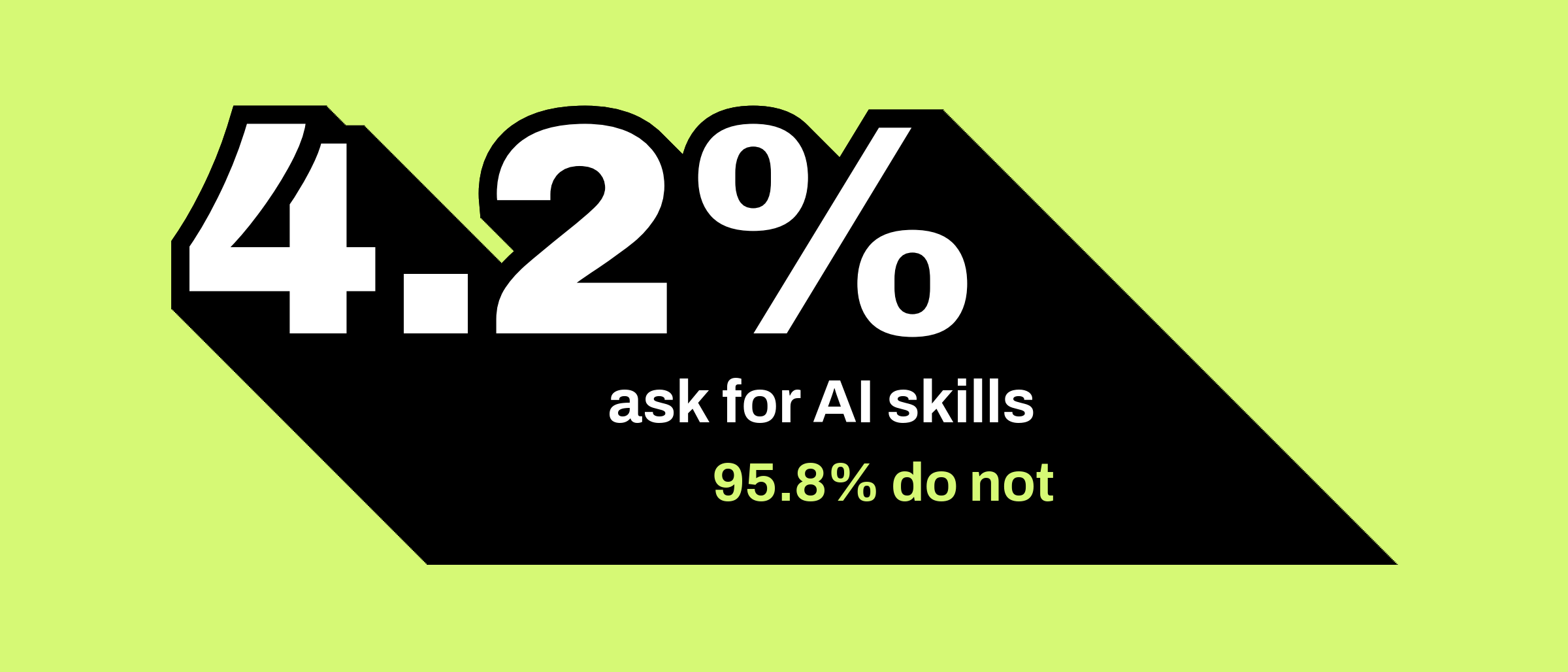
WINDSOR, ONTARIO, CANADA, September 3, 2026 /EINPresswire.com/ — A new study of 4,192 U.S. job postings across 21 occupations found that just 4.2% of postings in the occupations most exposed to generative AI asked candidates for AI skills. The study, conducted by Mango Thrive, used the International Labour Organization’s 2025 generative-AI exposure index to select 14 highly exposed occupations and 7 low-exposure controls, then examined postings collected between June 3 and September 1, 2026.
Data entry clerks top all 427 occupations on the ILO index with a score of 0.70. Out of 200 postings sampled for the role, none asked for AI skills. Bookkeepers, payroll clerks, loan officers, and office clerks showed similar results, each at 1% or below.
The occupations with the highest share of AI skill requests were not the most exposed on the index. Among the 21 occupations studied, copywriters ranked 12th by exposure score but led in AI-skill demand at 22.5%. Web developers (11.5%) and software developers (10.5%) followed. Across the full sample, the correlation between ILO exposure score and share of postings asking for AI was weak (Spearman rho = 0.26).
Key findings from the study include:
– 4.2% of postings in 14 highly exposed occupations asked for AI skills. Across all 21 occupations, the figure was 2.9%.
– 9.7% of postings mentioned AI in some form, but in two-thirds of those, AI was mentioned only contextually (hiring-process disclosures, company descriptions, or job-board features), not as a skill requirement.
– Among postings that did ask for AI skills, 80% listed them as a requirement rather than a nice-to-have.
– Postings asking for AI skills advertised 6.6% higher median salaries than other postings in the same occupation; the finding is descriptive, not causal.
– 13 postings (0.3%) told candidates not to use AI during the hiring process.
The study drew from Coresignal’s multi-source job postings database. Each posting was scanned using a two-tier dictionary of AI terms, then AI mentions were reviewed in context to distinguish requirements, preferences, contextual mentions, restrictions on AI use, and false positives. An independent blind review by a second reviewer of 100 matching postings produced 93.2% initial agreement and 98.1% agreement after one classification rule was clarified. A further 100 non-matching postings were reviewed in full, with no missed AI requirements found. Because the sample was balanced across occupations, the aggregate figures describe the occupations analyzed rather than the U.S. labor market as a whole.
Highly exposed occupations were 6.7 times more likely to ask for AI skills than low-exposure office jobs such as HR managers, attorneys, and civil engineers (4.2% vs. 0.6%). Physical occupations (registered nurses, truck drivers, and electricians) had no postings asking for AI skills.
The full study, including methodology, occupation-level data tables, and the complete list of findings, is available at mangothrive.com/ai-job-skills-study/.
About Mango Thrive
Mango Thrive is an independent publication covering AI and technology through original research and curated statistics. More at mangothrive.com.
Shane Tran
Mango Thrive
+1 519-567-2540
shane@mangothrive.com
Visit us on social media:
LinkedIn
Legal Disclaimer:
EIN Presswire provides this news content “as is” without warranty of any kind. We do not accept any responsibility or liability
for the accuracy, content, images, videos, licenses, completeness, legality, or reliability of the information contained in this
article. If you have any complaints or copyright issues related to this article, kindly contact the author above.

Media gallery